

Maple Dijon Chicken is an easy dinner made with juicy chicken breasts coated in a sweet and tangy maple mustard glaze. It’s a simple way to turn ordinary chicken into a delicious meal the whole family will enjoy.
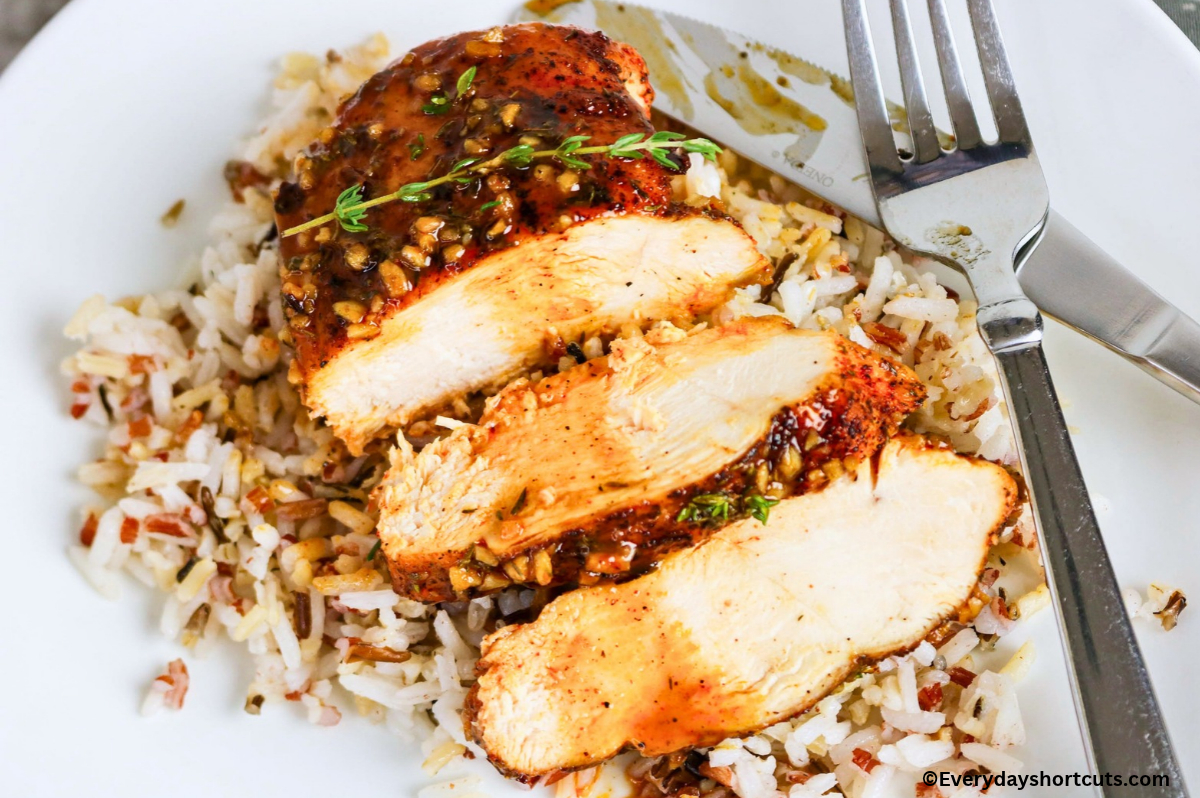
If you’re tired of making chicken the same way every week, this recipe is an easy way to switch things up. Most of the ingredients are pantry staples and the glaze takes just a few minutes to mix together. You can also adjust the flavor depending on what your family likes. Add a little more maple syrup for a sweeter glaze or extra Dijon mustard if you prefer more tang.
Another thing I love about this recipe is that everything cooks in one skillet. You start by searing the chicken on the stovetop to give it a little color, then finish it in the oven with the glaze. It’s a simple process that makes the chicken flavorful and keeps cleanup to a minimum.
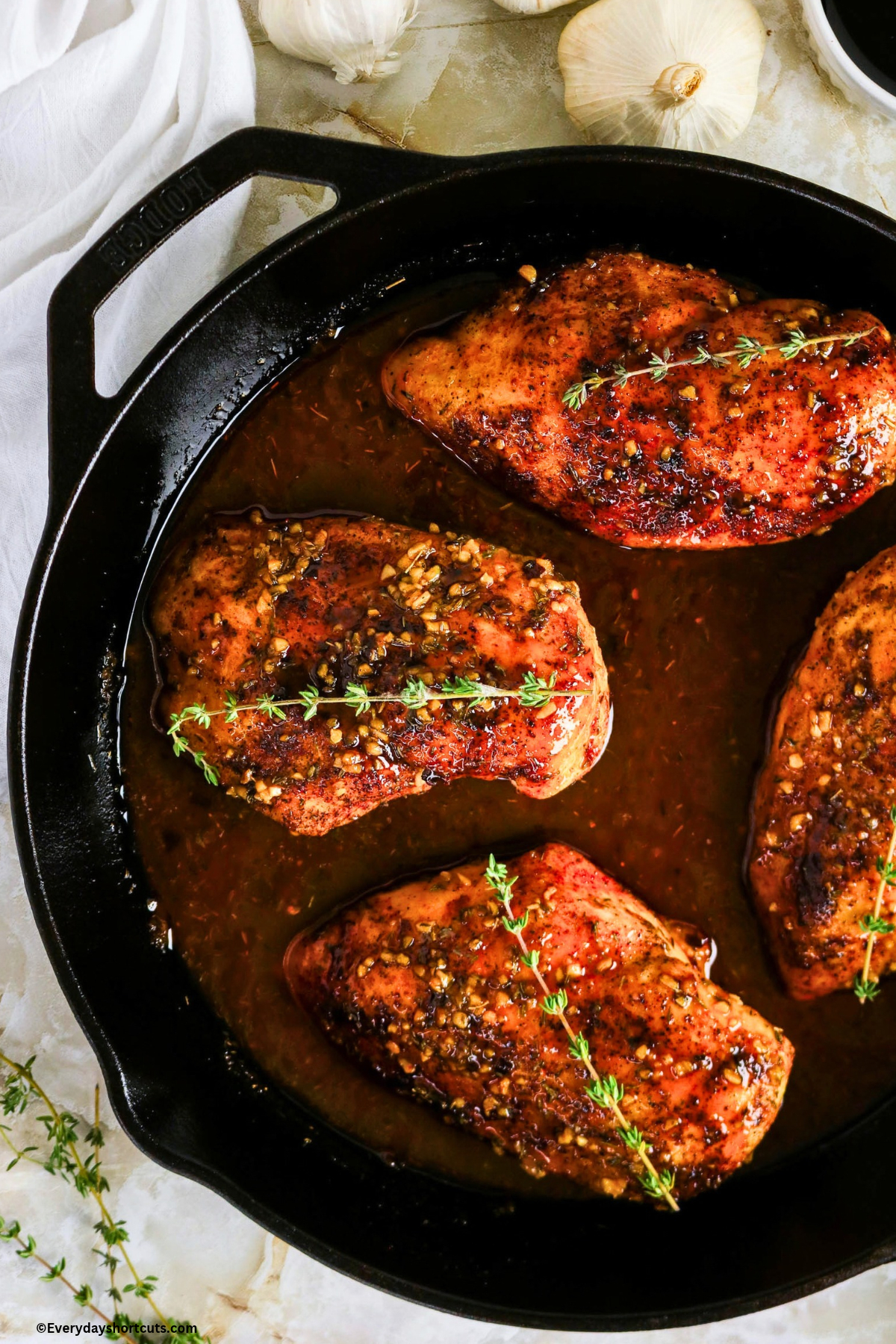
Serve it over rice or mashed potatoes to soak up the extra sauce, or add your favorite roasted vegetables for an easy weeknight dinner.
For more ways to change up your chicken dinners, try my Baked Caesar Chicken, Crockpot Italian Chicken, or Sheet Pan Garlic Parmesan Chicken Thighs.

Why You’ll Love This Recipe
- No marinating required: You don’t have to prep anything hours ahead of time.
- Great for meal prep: Make a batch at the beginning of the week and enjoy it in different meals over the next few days.
- Budget-friendly dinner: You don’t need expensive or hard to find ingredients to make this meal.
- Delicious any time of year: The maple flavor feels cozy in the fall, but it’s a dinner you can enjoy year-round.

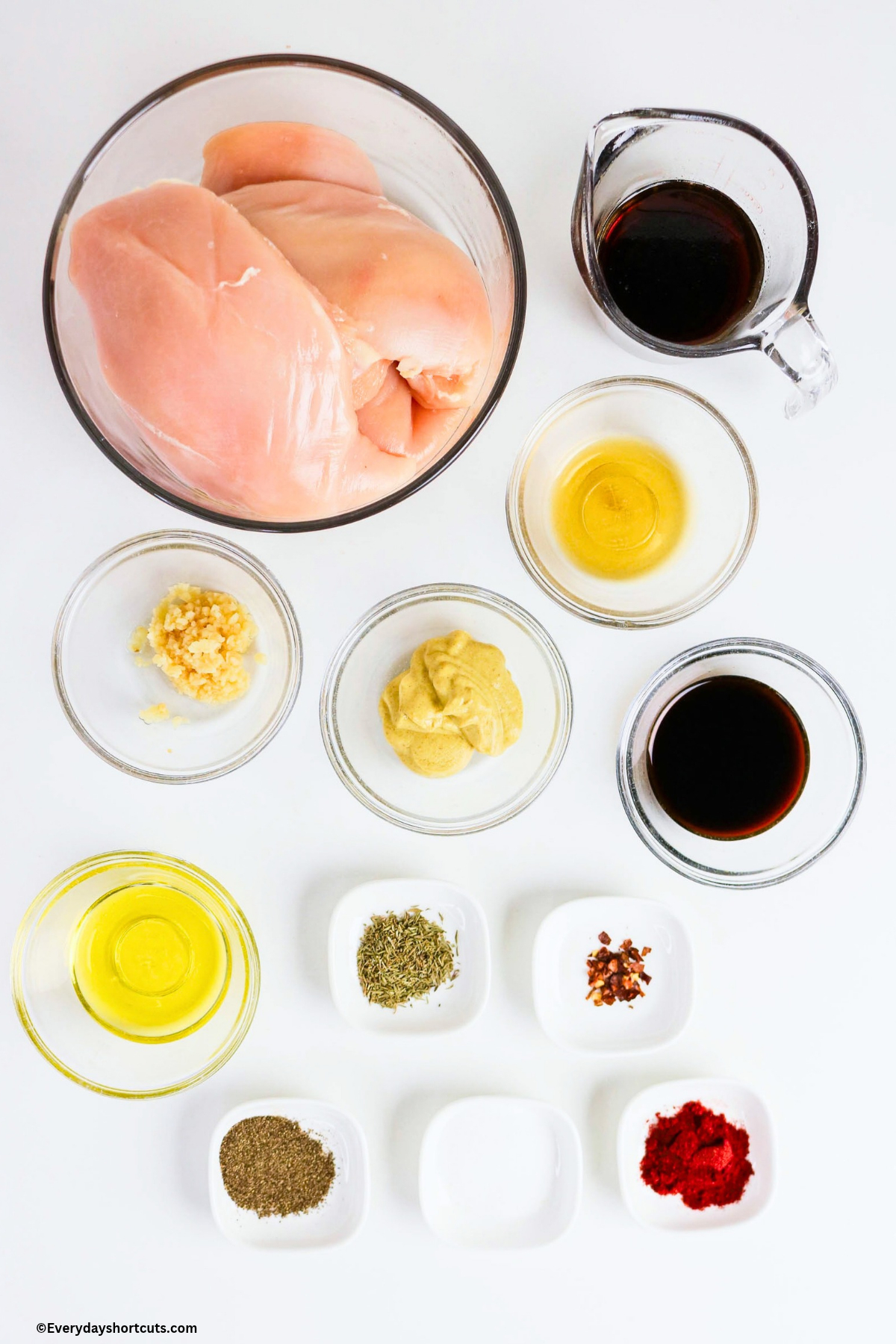
Maple Dijon Chicken Ingredients
- Chicken breasts: Boneless, skinless and about 2 pounds. Chicken thighs also work if you prefer that.
- Olive oil: Used for searing the chicken before baking.
- Maple syrup: Pure maple syrup gives the best flavor rather than pancake syrup.
- Dijon mustard: Balances the sweetness of the maple syrup with a slight tangy flavor.
- Soy sauce: Use low-sodium soy sauce if you prefer less salt.
- Minced garlic: Fresh garlic cloves give the sauce good flavor, but jarred minced garlic works too.
- Apple cider vinegar: Adds acidity to balance the sweet and savory ingredients. Lemon juice can be used instead.
- Seasonings: Salt, pepper, smoked paprika, thyme, red pepper flakes (optional)
How to Make Maple Dijon Chicken
Step 1: Preheat your oven to 400℉.
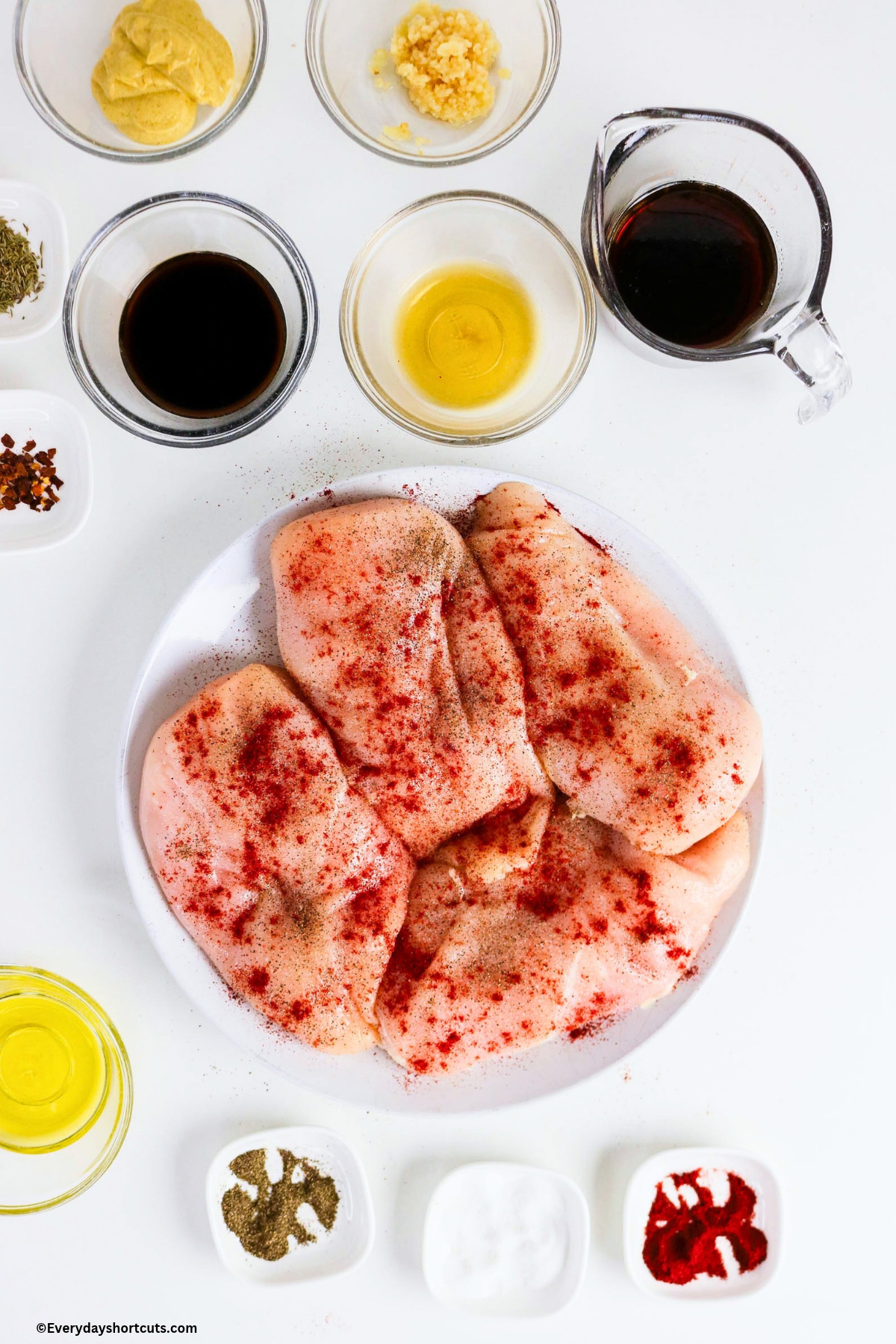
Step 2: Pat the chicken dry with paper towels. Season both sides with salt, pepper, and smoked paprika.
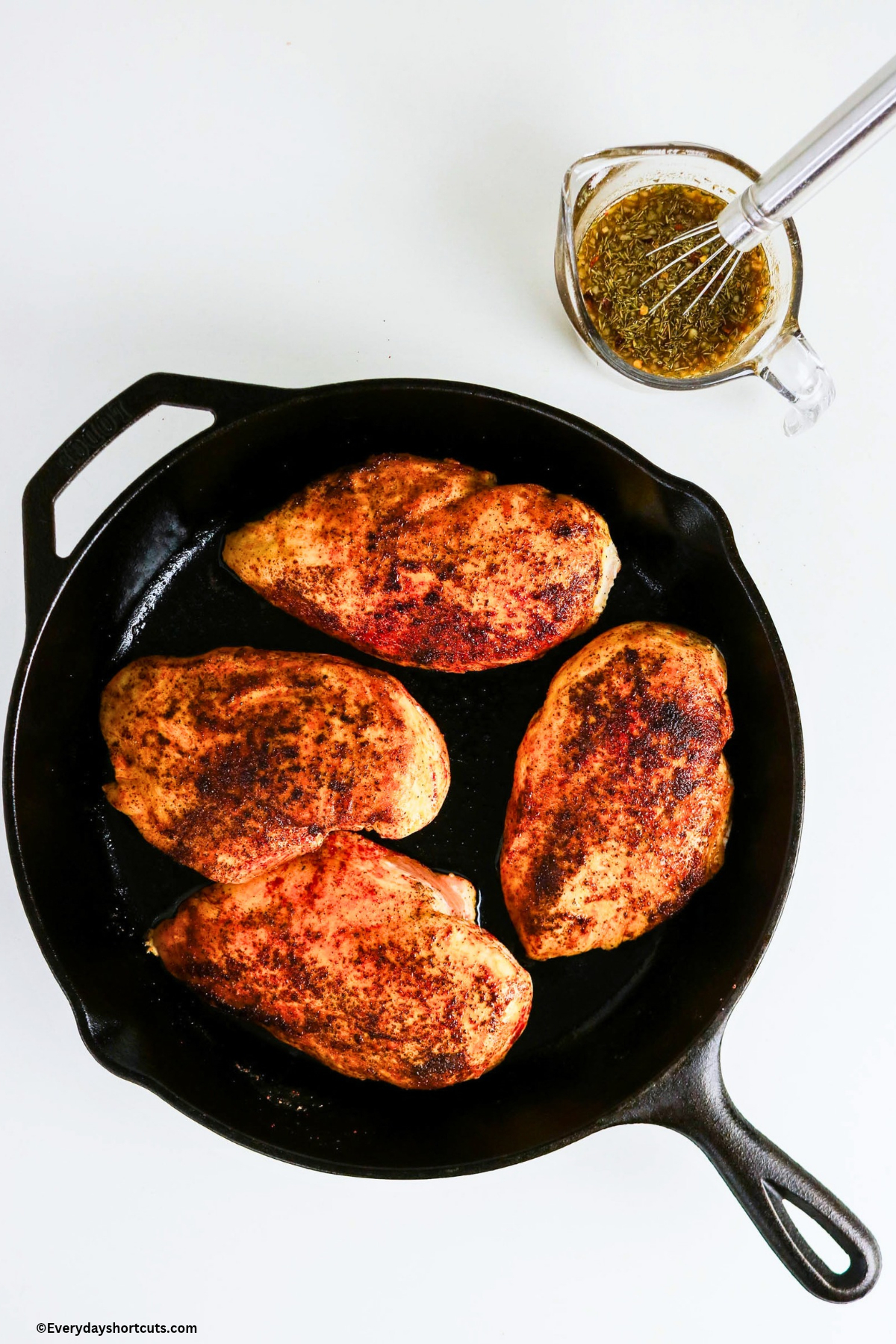
Step 3: Heat olive oil in a large oven-safe skillet over medium-high heat. Add chicken and cook 2-3 minutes per side, until lightly brown.
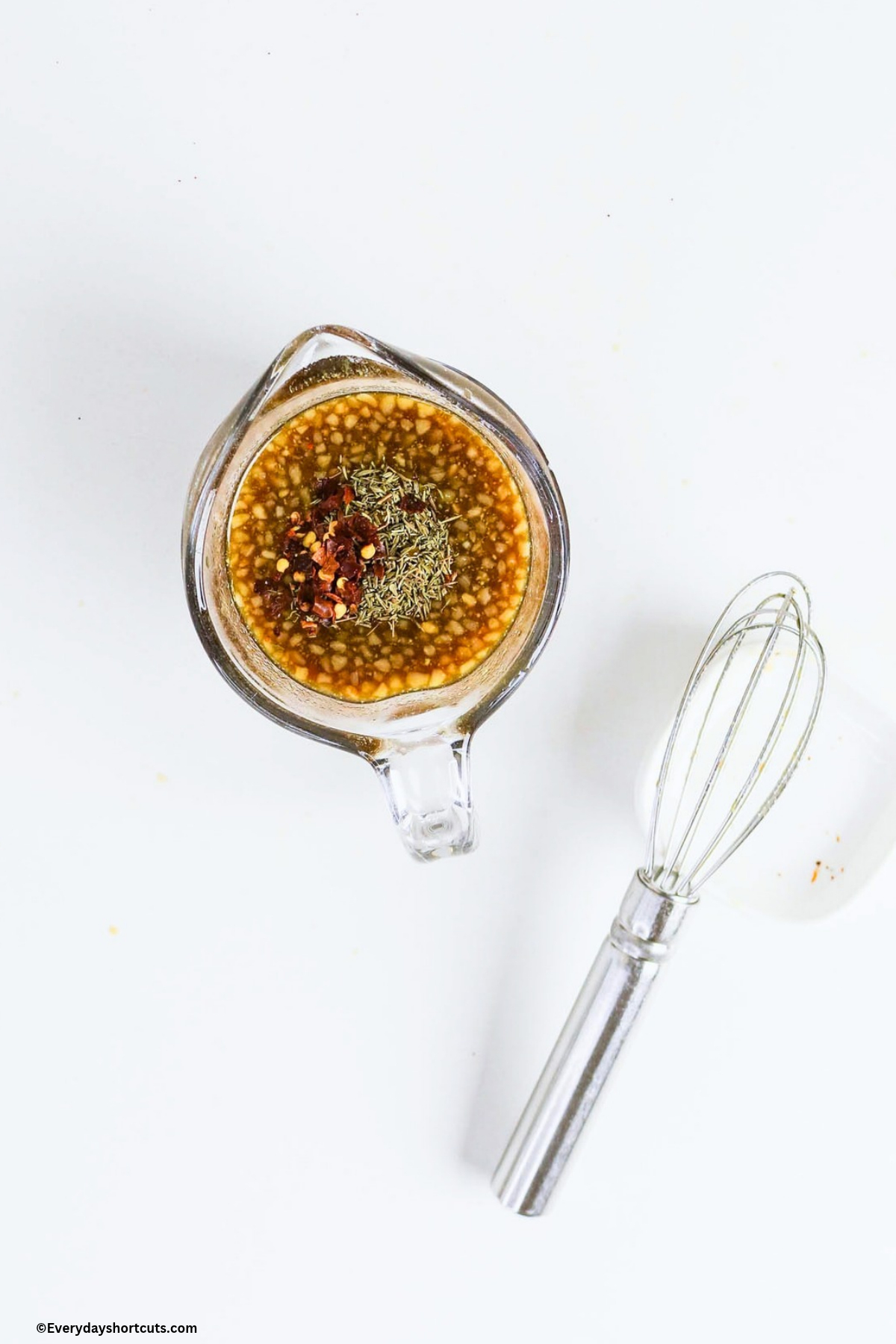
Step 4: In a small bowl, whish together the maple syrup, Dijon mustard, soy sauce, minced garlic, apple cider vinegar, dried thyme and red pepper flakes if using.
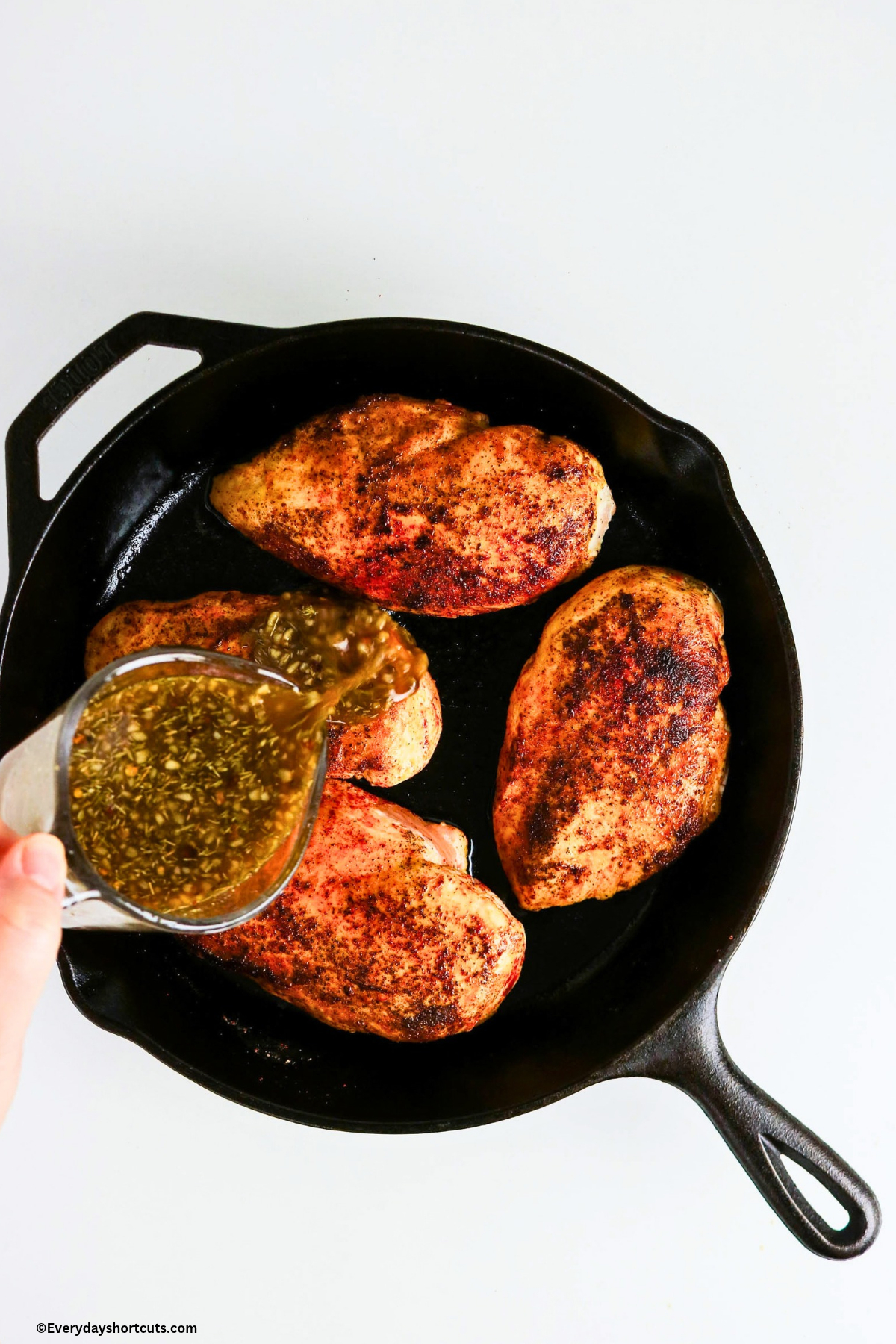
Step 5: Pour the maple Dijon mixture over the chicken turning them to coat both sides.
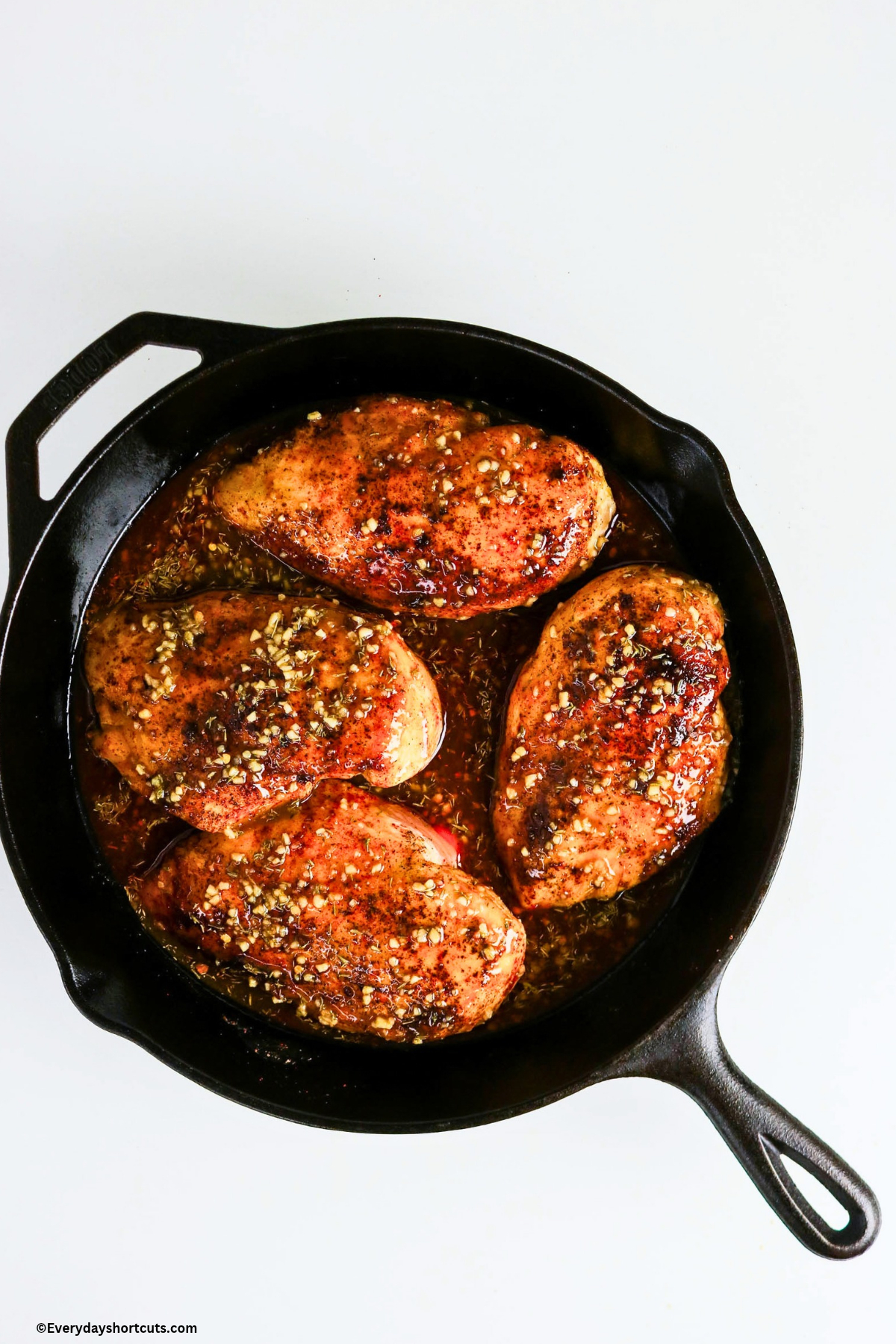
Step 6: Transfer the skillet to the preheated oven and bake for 25-30 minutes, depending on the thickness of the chicken. Check the thickest part with meat thermometer till reaches 165℉.
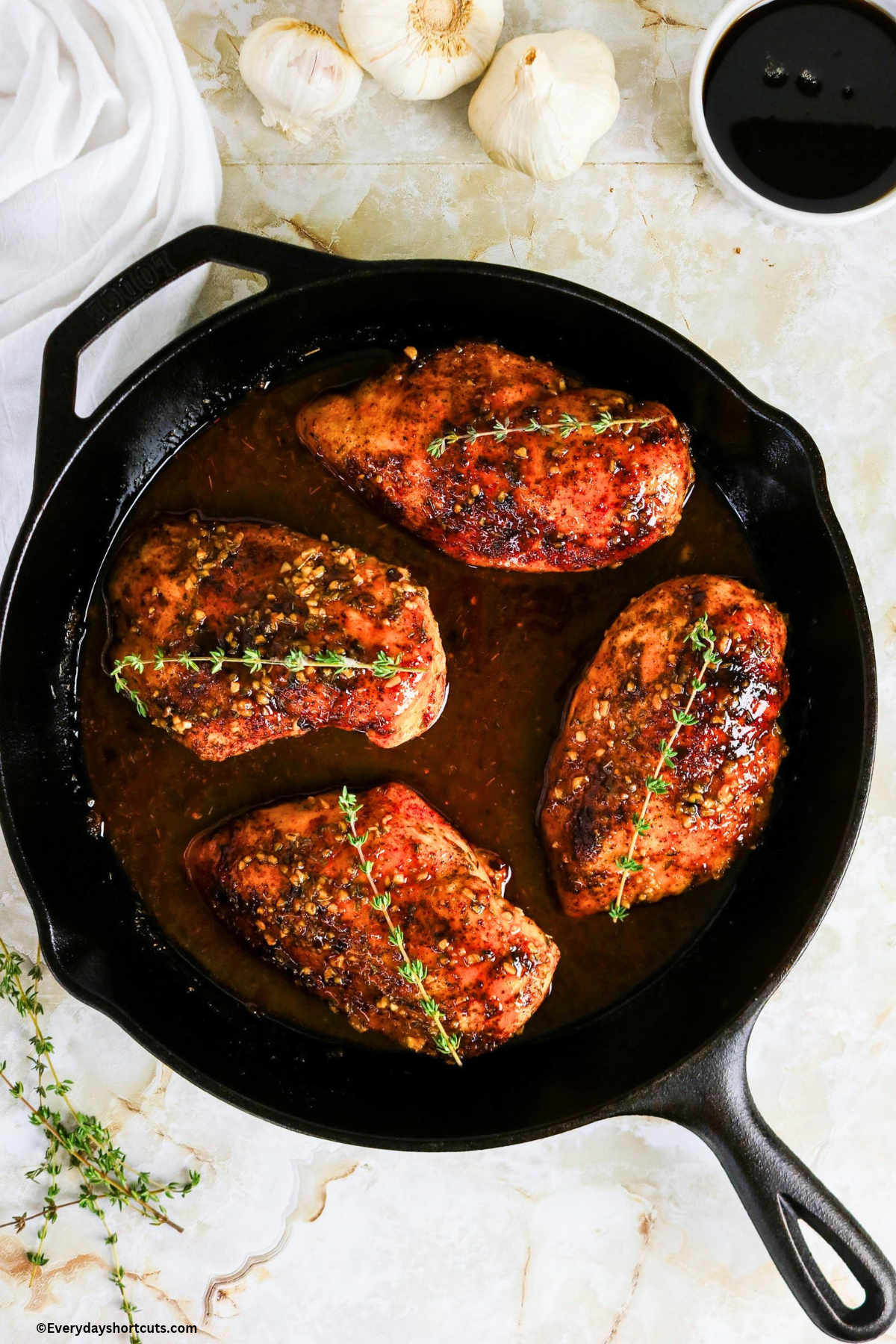
Step 7: Remove the skillet from the oven and spoon the warm maple Dijon sauce over the chicken. Let the chicken rest for 5 minutes before serving.
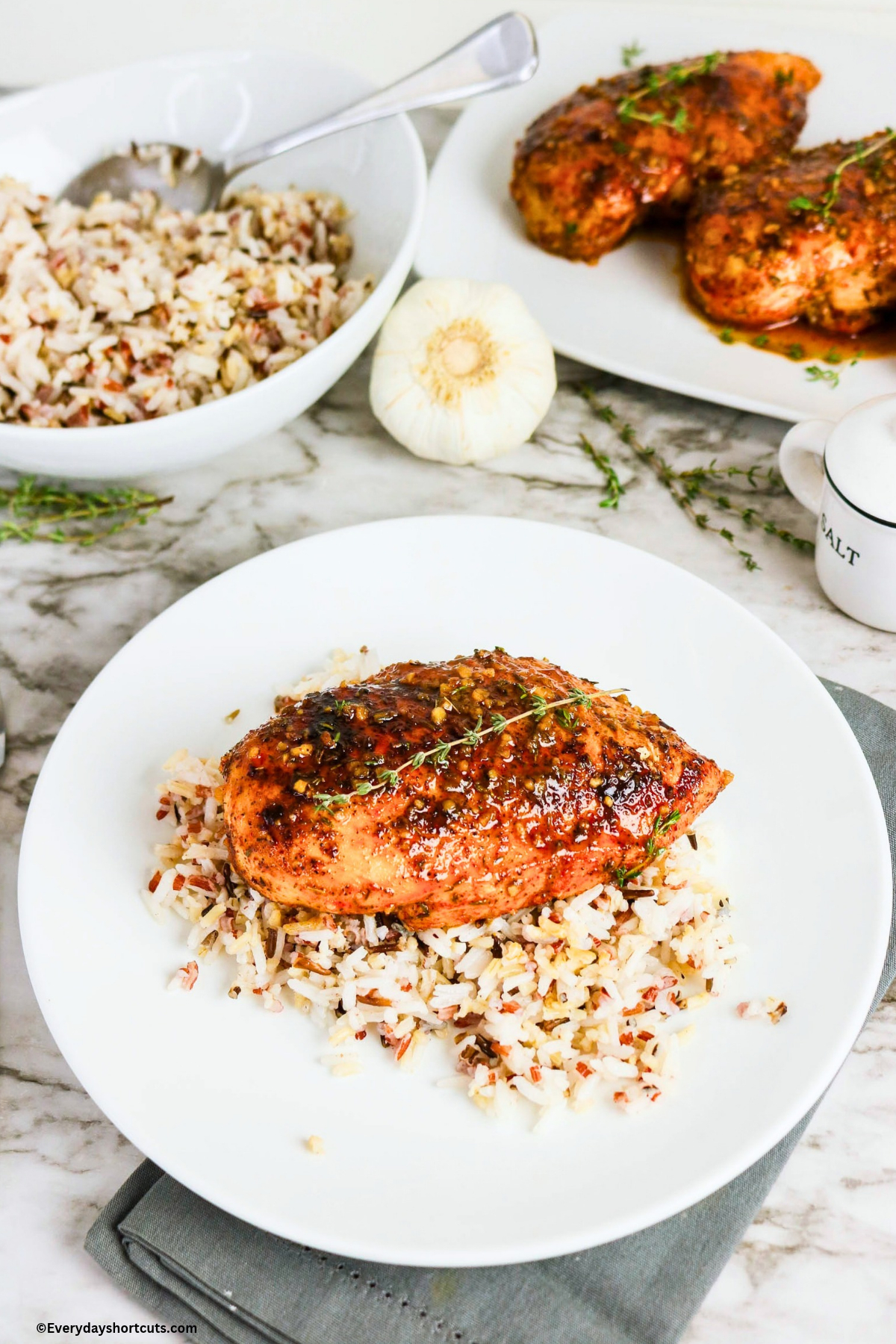
Step 8: Serve over rice and enjoy!
Recipe Variations
- Make it spicy: Add crushed red pepper flakes or a dash of hot sauce to the glaze.
- Try honey instead: If you’re out of maple syrup, honey works as a substitute. The flavor will be slightly different, but you’ll still get a sweet and tangy glaze.
- Add vegetables: Toss in green beans, carrots or broccoli during baking. Cut vegetables into small sizes so they finish cooking the same time as the chicken.
- Make it gluten-free: Use gluten-free tamari or coconut aminos in place of regular soy sauce. If using coconut aminos, you may need to adjust the salt.
Helpful Tips
- Use chicken breasts that are similar in size. If some pieces are much thicker than others, pound the thicker portions slightly so everything cooks more evenly.
- Don’t skip searing. Browning the chicken first adds flavor and gives it a better appearance before baking.
- Use an oven-safe skillet. A cast-iron or stainless steel skillet works well. If you don’t have one, transfer the seared chicken and glaze to a baking dish before placing it in the oven.
- Don’t waste the extra sauce. Spoon the glaze over your chicken, rice or potatoes when serving.
- Let the chicken rest. Give it about 5 minutes before slicing to help keep the juices in the meat.
Storing Leftovers
- Refrigerator: Allow the chicken to cool slightly, then place it in an airtight container with any leftover glaze in the refrigerator for up to 3 days.
- Freezer: Place the cooked chicken an sauce in a freezer-safe container or bag and freeze up to 3 months. Thaw overnight in the refrigerator before reheating.
- Reheating: Warm the chicken in a covered skillet over low heat with a splash of water or chicken broth to keep it from drying out. You can also reheat in the microwave until warmed through.
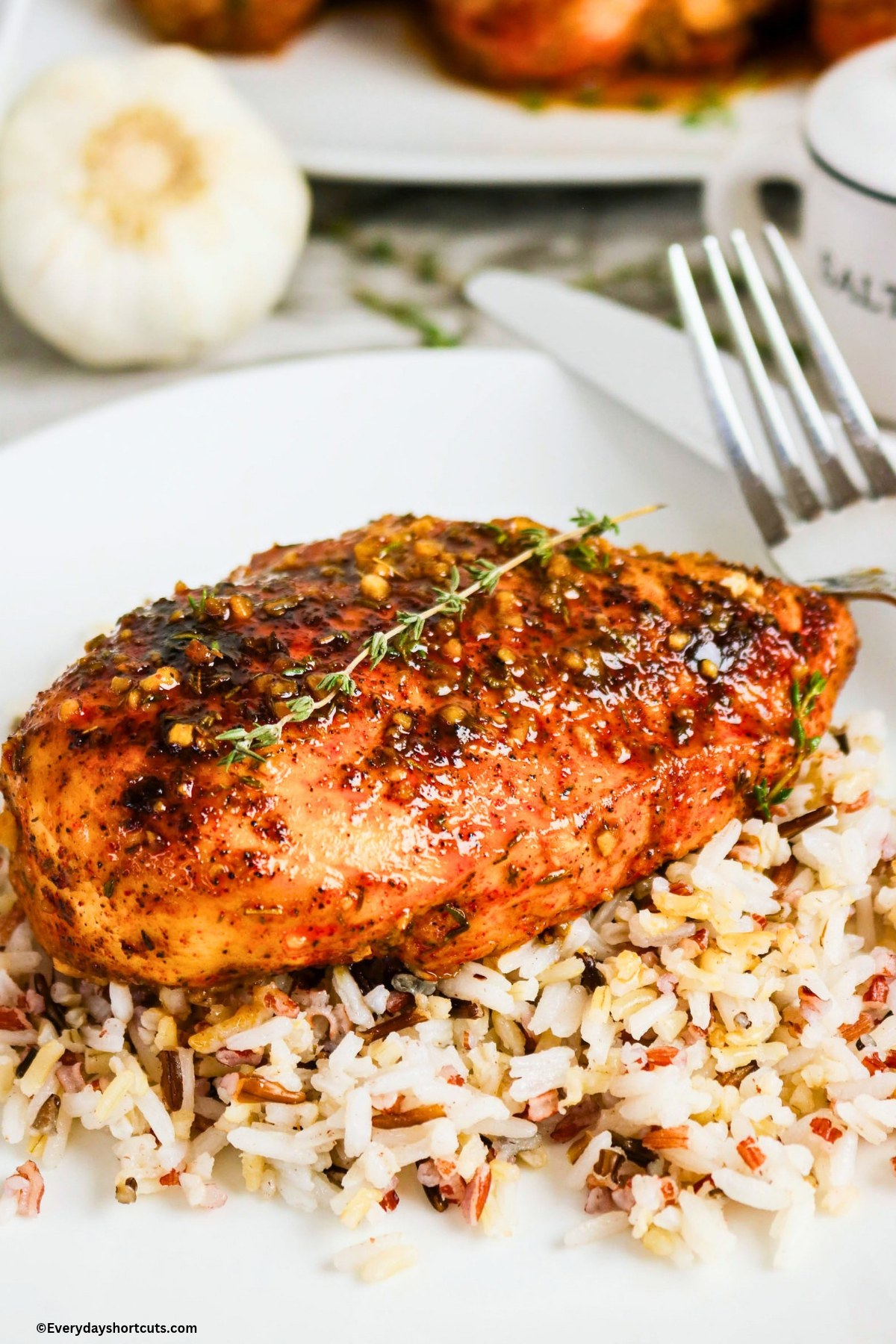
Frequently Asked Question
It’s best to thaw the chicken completely in the refrigerator before making this recipe. This will allow the chicken to sear evenly and the glaze to coat the meat better.
This chicken goes well with mashed potatoes, white or brown rice, roasted broccoli, green beans, carrots, or a simple side salad. If you want something that will soak up the extra glaze, mashed potatoes or rice are good choices.
Recipe
Maple Dijon Chicken
Ingredients
- 4 boneless, skinless chicken breasts (about 2 pounds)
- 1 teaspoon salt
- ½ teaspoon black pepper
- 1 teaspoon smoked paprika
- 2 tablespoons olive oil
- ⅓ cup pure maple syrup
- 2 tablespoons Dijon mustard
- 2 tablespoons soy sauce
- 3 cloves garlic, minced
- 1 tablespoon apple cider vinegar
- ½ teaspoon dried thyme
- ¼ teaspoon crushed red pepper flakes, optional
Instructions
- Preheat your oven to 400℉.
- Pat the chicken dry with paper towels. Season both sides with salt, pepper, and smoked paprika.
- Heat olive oil in a large oven-safe skillet over medium-high heat. Add chicken and cook 2-3 minutes per side, until lightly brown.
- In a small bowl, whish together the maple syrup, Dijon mustard, soy sauce, minced garlic, apple cider vinegar, dried thyme and red pepper flakes if using.
- Pour the maple Dijon mixture over the chicken turning them to coat both sides.
- Transfer the skillet to the preheated oven and bake for 25-30 minutes, depending on the thickness of the chicken. Check the thickest part with meat thermometer till reaches 165℉.
- Remove the skillet from the oven and spoon the warm maple Dijon sauce over the chicken. Let the chicken rest for 5 minutes before serving.
- Serve over rice and enjoy!
Notes
Helpful Tips
- Use chicken breasts that are similar in size. If some pieces are much thicker than others, pound the thicker portions slightly so everything cooks more evenly.
- Don’t skip searing. Browning the chicken first adds flavor and gives it a better appearance before baking.
- Use an oven-safe skillet. A cast-iron or stainless steel skillet works well. If you don’t have one, transfer the seared chicken and glaze to a baking dish before placing it in the oven.
- Don’t waste the extra sauce. Spoon the glaze over your chicken, rice or potatoes when serving.
- Let the chicken rest. Give it about 5 minutes before slicing to help keep the juices in the meat.
Storing Leftovers
- Refrigerator: Allow the chicken to cool slightly, then place it in an airtight container with any leftover glaze in the refrigerator for up to 3 days.
- Freezer: Place the cooked chicken an sauce in a freezer-safe container or bag and freeze up to 3 months. Thaw overnight in the refrigerator before reheating.
- Reheating: Warm the chicken in a covered skillet over low heat with a splash of water or chicken broth to keep it from drying out. You can also reheat in the microwave until warmed through.
Nutrition
Nutrition Disclosure
Nutritional facts are estimates and are provided as a courtesy to the reader. Please utilize your own brand nutritional values to double check against our estimates. Nutritional values are calculated via a third party. Changing ingredients, amounts or cooking technique will alter the estimated nutritional calculations.
Leave a Reply